A Comprehensive Guide to Learning Drywall Fixing and Installation
This overview supplies a thorough expedition of drywall repair work and installation, dealing with both newbies and skilled professionals. It details important devices, strategies for patching and hanging sheets, and the essential completing processes. drywall contractors. By recognizing usual challenges, individuals can achieve polished results. Understanding these abilities not just boosts one's home however likewise builds self-confidence in do it yourself ventures. What fundamental pointers will guarantee a successful task from start to complete?
Important Tools for Drywall Repair Service and Installment
When starting on drywall repair and installation, a couple of crucial devices can substantially boost the efficiency and top quality of the job. A drywall blade, generally readily available in numerous sizes, is essential for using joint substance and smoothing seams. A taping blade is likewise necessary for feathering sides and making sure a seamless coating. Furthermore, a drywall saw or utility blade permits precise cutting of drywall sheets to fit any kind of space.

Step-by-Step Overview to Patching Holes
Covering holes in drywall is an uncomplicated process that can recover the wall's look and stability. To begin, the area around the opening must be cleaned and any kind of loosened debris eliminated. For small openings, a basic spackle or joint substance can be used with a putty blade. Larger holes may require a patch; an item of drywall can be cut to fit the opening, safeguarded with adhesive or screws, and afterwards taped around the sides. When the patch is in area, joint substance is used over the spot and feathered bent on blend with the bordering wall surface. After the substance dries, sanding is necessary to accomplish a smooth surface. The fixed location can be primed and painted to match the rest of the wall surface. This method guarantees a smooth repair work, improving the overall appearance of the drywall and keeping its architectural honesty.
Strategies for Hanging Drywall Sheets
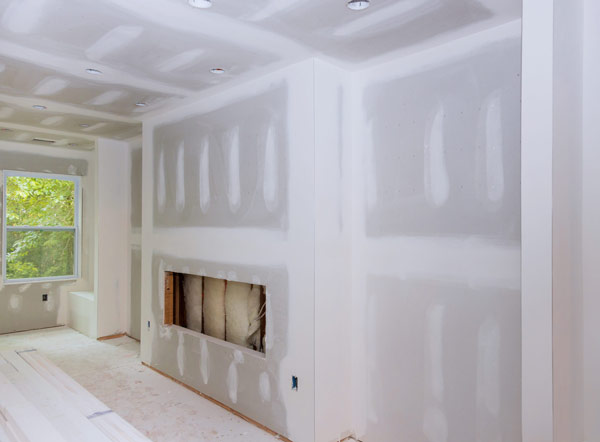
After efficiently repairing holes in drywall, the next action includes hanging new drywall sheets to produce a seamless surface. To accomplish this, one must start by determining the wall room accurately and cutting the drywall sheets to fit. It is vital to hang the sheets flat for much better architectural honesty, starting from the top and working downwards.
Utilizing a drywall lift can streamline the process, especially for ceiling installations. When positioned, securing the sheets with drywall screws at intervals of about 12 inches along the sides and 16 inches in the area is essential. This assures a strong hold and reduces the risk of sagging. For edges, the sheets should be reduced to fit well, enabling for cleaner joints. It is suggested to surprise the joints between sheets to enhance the general structure, developing a much more durable coating all set for the next stage in the drywall installment procedure.
Ending Up Touches: Taping and Mudding
Finishing the drywall setup involves the essential steps of taping and mudding, which guarantee a polished and smooth surface. Taping requires the application of joint tape over the seams in between drywall sheets. Drywall Repair Ogden UT. This tape can be either paper or fiberglass mesh, with each kind offering one-of-a-kind advantages. After taping, the next step is mudding, where joint compound, or "mud," is put on cover the tape and fill up have a peek at these guys any type of flaws
Making use of a drywall knife, the substance should be spread out uniformly, guaranteeing a feathery edge to decrease visible adjustments. Multiple coats are often required, with fining sand in between each layer to accomplish a seamless surface area. Cautious focus throughout this process is necessary, as it greatly impacts the final appearance of the wall. With the appropriate technique and patience, completion outcome will certainly be a perfect foundation ready for paint or finishing touches.
Typical Blunders to Avoid in Drywall Projects
/Bhg-how-to-patch-dry-wall-hero-2431_ErCJ7v2pKcVADoq5rBc19m-9bc6054b40c84af4bd3ba2b19b3693b9.jpg)
Another usual mistake is not enabling enough drying out time in between layers, which can trap wetness and jeopardize the finish. In addition, ignoring to feather the sides effectively can create noticeable lines and imperfections. Skipping sanding or using inappropriate strategies may leave rough places. By being mindful of these challenges, individuals can substantially boost the quality of their drywall tasks and accomplish a professional-looking finish.
Frequently Asked Concerns
Can I Fix Drywall Without Professional Help?
Yes, one can repair drywall without specialist aid. With the right devices, products, and support, individuals can successfully take care of small repair services. Considerable damage may call for expert experience for perfect outcomes and longevity.
How Much Time Does Drywall Substance Require To Dry?
Drywall substance typically takes in between 24 to two days to completely dry entirely, depending upon variables such as humidity and temperature. Thinner layers may dry out quicker, while thicker applications call for even more time for optimal outcomes.
What's the most effective Kind of Paint for Drywall?
The ideal type of Get More Information paint for drywall is generally a water-based latex paint. It supplies excellent protection, longevity, and ease of application, making it suitable for interior look at here now walls while enabling simple cleanup with soap and water.
How Do I Protect Against Mold on Drywall?
To avoid mold on drywall, warranty proper air flow, control moisture degrees, use mold-resistant materials, and immediately resolve any kind of leakages. Normal examinations and instant removal of water damage are additionally vital for lasting avoidance.
Is Drywall Recyclable After Elimination?
Drywall is recyclable after removal, supplied it is devoid of contaminants like mold and mildew, paint, or various other harmful materials. Recycling centers can process it right into brand-new products, advertising sustainability and lowering garbage dump waste in building and construction.
When beginning on drywall fixing and installment, a few vital tools can greatly improve the efficiency and top quality of the work. After efficiently repairing openings in drywall, the next step entails hanging new drywall sheets to create a seamless surface area. Finishing the drywall setup entails the crucial steps of taping and mudding, which guarantee a polished and smooth surface. Achieving a sleek finish in drywall projects can be challenging, and several common blunders can undermine the top quality of the job. Yes, one can fix drywall without professional aid.